
Newsletter
Join the Community
Subscribe to our newsletter for the latest news and updates

A realistic timeline of what happens after you submit a product to launch directories: what gets indexed when, where the link value shows up, what fades, and what a directory will never do for you.
Most founders submit their product to a launch directory with a vague hope and no timeline. The hope is usually some mix of "traffic" and "SEO juice." Then two weeks pass, nothing visible happens, and the whole exercise gets filed under things that don't work.
I run a launch platform and maintain a catalog of 190 other launch directories, which I check against live data a few times a year. So I get to see this from both sides: what directories actually deliver, and what founders think they were promised. The gap between the two is mostly a timing problem. Directory listings do real SEO work, but almost none of it is visible in the first two weeks, and almost all of it is boring.
Here is what actually happens, in the order it happens.
The day your listing goes live, you get exactly three things.
First, a page about your product on someone else's domain. Second, a link from that page to yours. In my catalog, 183 of the 190 directories give a do-follow link, so the odds are good that the link passes authority, but it is worth confirming per directory rather than assuming. Third, a trickle of referral clicks from people browsing the directory that day.
That's the whole package. Everything else in this article is a downstream effect of those three things, and each one matures on its own schedule.
The first real SEO effect is the least glamorous one: discovery. Search engine crawlers revisit established directories constantly, because those sites publish new pages daily. When your listing appears there, crawlers find your link and follow it.
For an established site this is a non-event. For a new domain it matters a lot. A fresh site with no inbound links can sit in a crawl queue for weeks; a fresh site linked from several regularly crawled directories gets found and indexed noticeably faster. If your product launched recently, this is the single most valuable thing directories do for you, and it happens quietly in the first two weeks.
What you will see in your tools during this window: crawl activity in Search Console, maybe your first "linking site" entries appearing. What you will not see: rankings, traffic, or any movement in third-party authority scores.
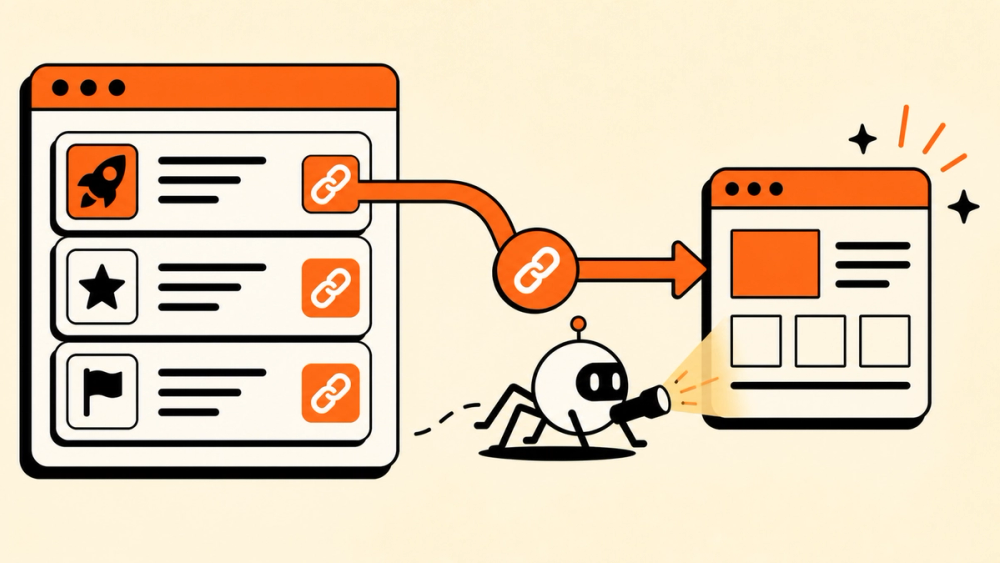
The second effect shows up in searches for your product, not searches for your category.
Directory listing pages tend to rank well for branded queries: "yourproduct review," "yourproduct alternatives," "what is yourproduct." Within a few weeks of being listed, those pages start occupying results around your name. This sounds trivial until you remember who searches your brand name: people who heard about you somewhere else and are deciding whether to trust you. A name search that returns your site plus five directory listings describing you accurately reads very differently from a name search that returns your site and nothing.
This is also when link equity starts registering. Backlink indexes pick up the new links, your linking-domains count climbs, and if you started near zero, authority metrics begin to move. One caveat from my own data: directory authority is unevenly distributed. The median domain rating across my catalog is 64, which is genuinely strong, but the range is wide, and a handful of high-authority listings does more than thirty weak ones.
By now the launch-day referral spike is long gone. Two thirds of the directories in my catalog are low-traffic sites, and even the high-traffic ones only send meaningful visitors during the window when you're on the front page. If you judged directories purely on referral traffic, you'd conclude they're worthless by week six.
But this is exactly when the durable effects consolidate. The links have been indexed and aged slightly. Your domain has gone from "unknown to crawlers" to "known, linked, and categorized." Category-level pages you publish now get crawled faster and evaluated against a domain that has some evidence behind it. None of this wins you a competitive keyword by itself. What it does is remove the cold-start penalty that keeps new domains invisible regardless of content quality.
The honest summary of the 90-day mark: directories will have moved you from zero link profile to a baseline one, filled in the search results around your brand name, and sped up how quickly everything else you do gets noticed. That is the entire, real, defensible SEO case for them.
It's worth being explicit about the other side, because directory marketing rarely is.
A directory listing will not rank you for competitive category keywords. "Best CRM for freelancers" is won with content and product reputation, not with fifty listings. It will not fix a site with thin pages, broken structure, or nothing worth linking to; links amplify a site, they don't substitute for one. And it will not produce a lasting traffic channel. Treat any referral visitors as a bonus, not the point.
There are also listings that give you nothing at all. In my catalog, 7 directories give no-follow links only, 18 charge for a listing, and 17 keep your listing free only while their badge stays on your site. None of those are automatically bad deals, but each one changes the math, and you should know which kind you're submitting to before you spend the time.
If I compress all of the above into a plan, it looks like this:
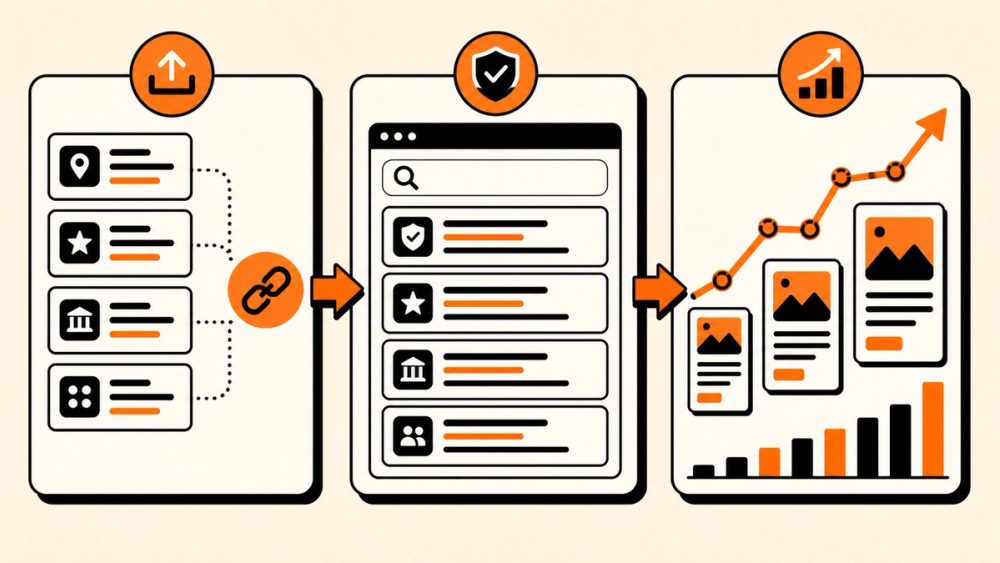
The selection step is where most founders waste time, because directory lists circulate for years after half the entries stop being worth it. This is exactly why I maintain a catalog of launch directories with live checks on link type, badge requirements, pricing, and traffic for each entry: checking those four things before submitting is the difference between thirty useful listings and thirty wasted forms.
A launch directory is not a growth channel. It is infrastructure for a new domain: faster discovery, a baseline link profile, and a credible search results page around your name. Those effects are real, they show up on a 90-day schedule rather than a 9-day one, and they mostly benefit sites that go on to do something with them.
So sequence it honestly. Spend the first two weeks getting listed in the right places, the next month making those listings good, and the rest of the quarter building the content that the listings exist to support. If you want a place to start the first step, you can submit your product here and work outward from there.
The founders who are disappointed by directories at day 14 and the founders who credit them at day 90 did the same thing. The difference is what they expected, and what they did while they waited.