Overview
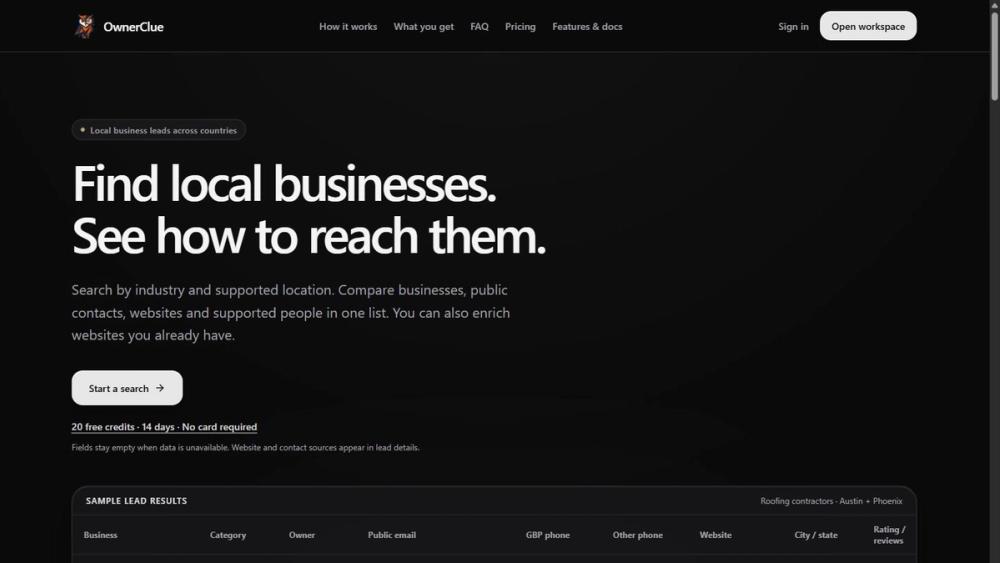
OwnerClue is a browser-based local business research product for agencies, founders, freelancers, and sales teams. It helps users move from a market or business category to a list of businesses they can inspect. Users search by industry and location in supported countries, review the returned records, and decide which businesses deserve further attention. The workflow brings public contact information and supported owner evidence together with the sources behind those details. A team can use the results to prepare market research, identify possible local partners, or develop a focused prospecting list.
AI-assisted website research
The AI-assisted part of OwnerClue supports research into information published on business websites. Website research can help extract contact details and retain the original evidence for review. This is useful when a researcher wants to understand where an email address, phone number, or owner reference came from. The source remains part of the review process. Users can inspect the linked page and consider whether the information fits their purpose. AI assistance supports the research workflow, while the user makes the decision about which records to keep and how to use them.
Public contact details
OwnerClue presents public email addresses and phone numbers when the available sources provide them. These fields help researchers organize the information that a business has made available. A returned business may have a phone number, an email address, both, or neither. Missing details stay blank. Users can see the information available for a record and decide whether another source needs to be checked. Keeping missing fields visible also helps a team explain why some businesses are ready for further review while others still need additional research.
Supported owner evidence
Some local business research questions involve the person associated with a business. OwnerClue includes supported owner evidence when the research can find an appropriate published reference. Users should inspect the source and understand what it actually establishes. A mention on a business website can be useful context, and the wording of the original page matters. Reviewing the source helps a researcher distinguish a named person, a contact role, and evidence that supports an owner connection. This review is especially relevant when a team plans to personalize a business conversation.
Source links and capture dates
Source links and capture dates make research records easier to review. A link gives the user a path back to the original page, and the capture date adds context about when the information was collected. A researcher can open the source, read the surrounding text, and consider whether a detail remains useful for the current task. This approach also supports internal review. When colleagues discuss a record, they can look at the same supporting page and explain why they kept a detail or decided to leave it out.
Search by industry and location
A useful starting point is a specific industry and a location in one of the supported countries. A focused query gives the researcher a clearer question to answer. An agency might investigate a local service category before preparing a proposal. A founder might explore a business segment to understand potential partners. A sales team might research a particular market before building a prospecting list. After reviewing the first results, users can decide whether to narrow the category, change the location, or continue inspecting individual businesses.